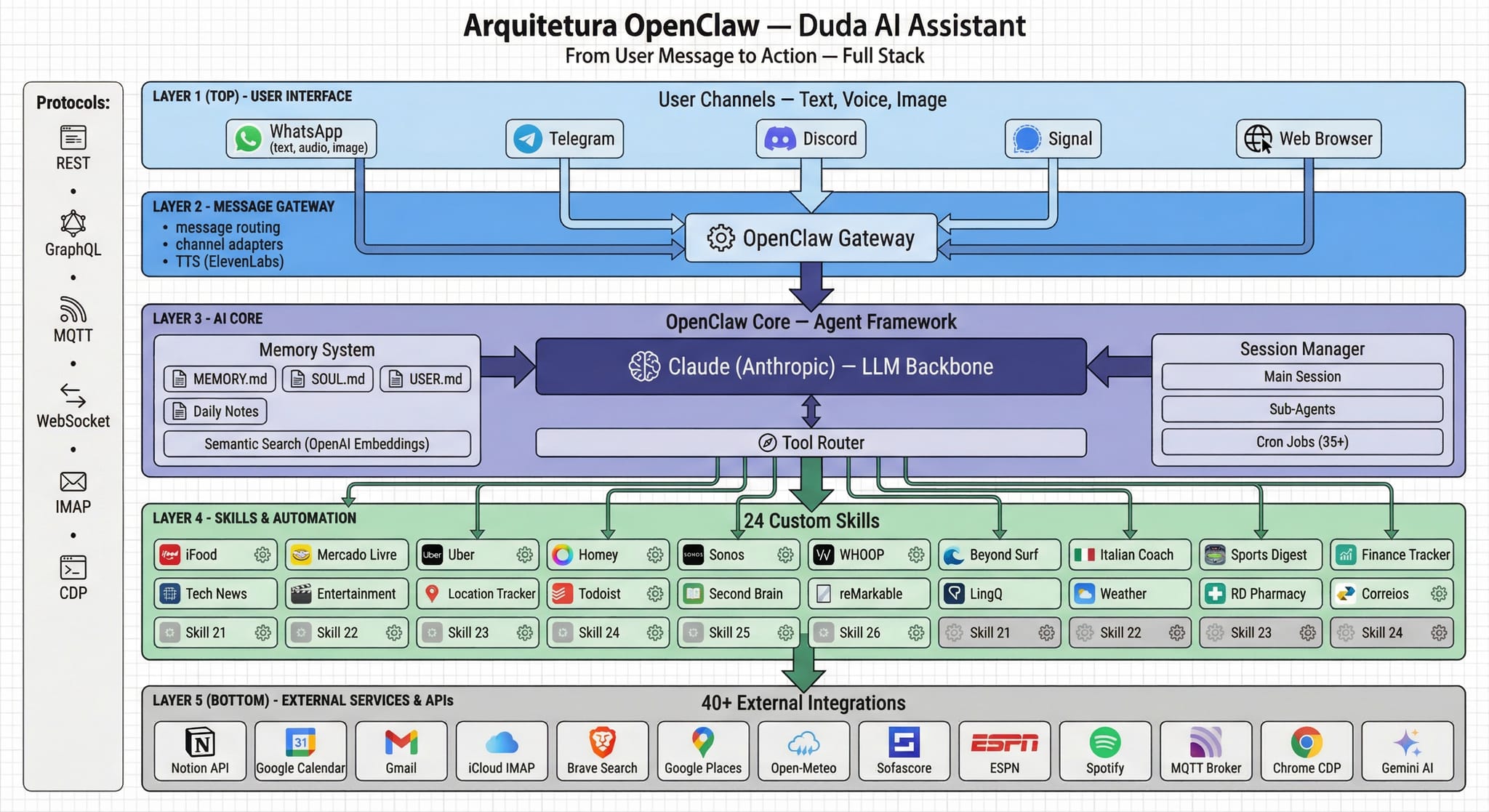
15 Days Building a Personal AI Operating System
R$ 2,700 in transactions, 150+ APIs, 40+ integrations. How I turned OpenClaw into a complete agentic ecosystem connected to the real world.
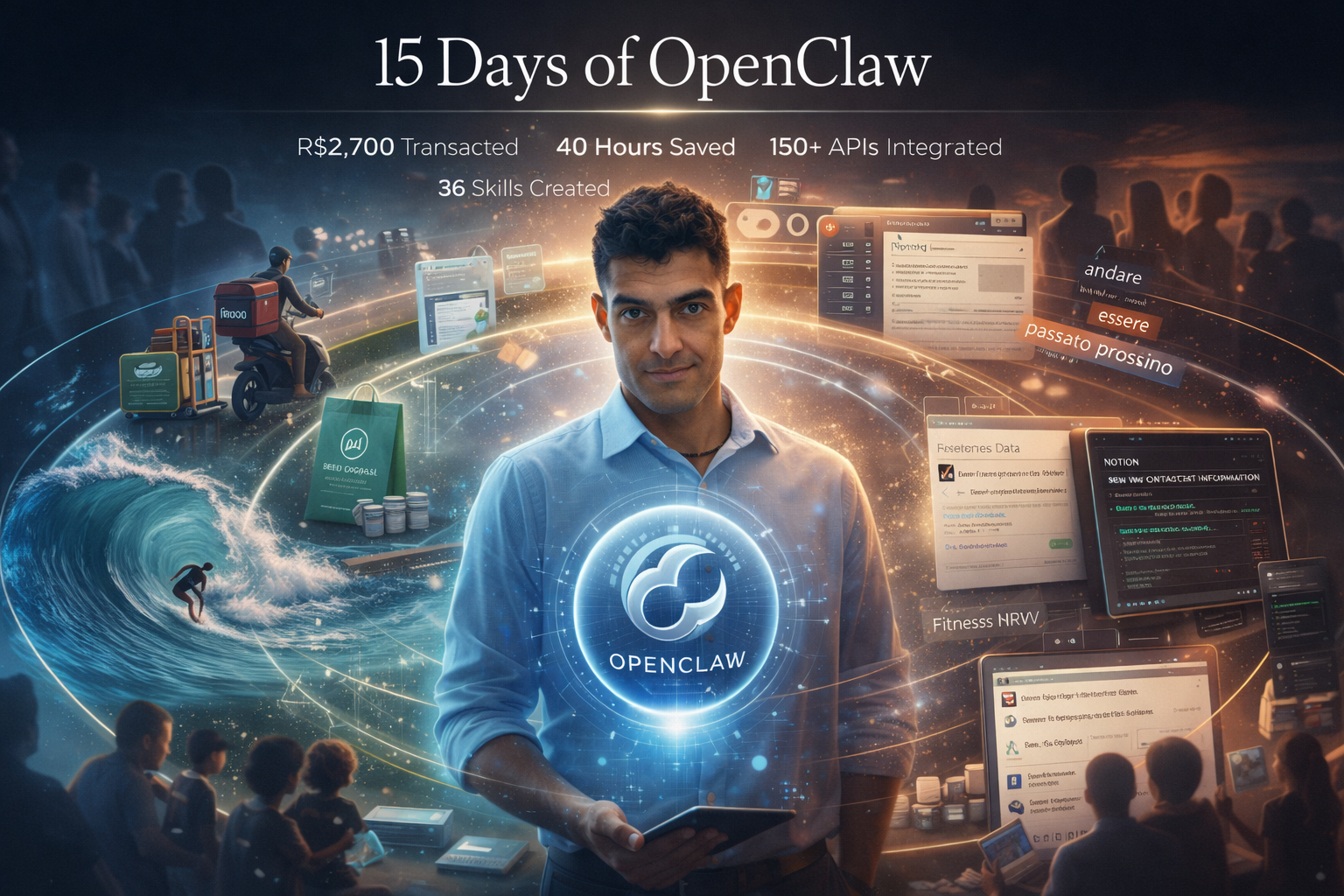 I transacted R$ 2,700 through Agentic Commerce, built 150+ APIs and 40+ integrations. All in 15 days.
I didn’t want a chatbot. I wanted a system that executes.
So I used OpenClaw as a foundation to build something bigger: a complete agentic ecosystem connected to my real world. This wasn’t prompt engineering. It was systems engineering.
Architecture before features
The first decision wasn’t “which integrations?” It was: what ontology?
I modeled everything as objects and flows:
- Merchant → Cart → Payment → Order → Events
- Home → Zone → Device → Capability
- Place → Geofence → Event → Automation
- Ticker → Group → Price → Earnings → Digest
- Recovery → Sleep → Strain → Recommendation
The complete ontology became an executable map of the system. Without ontology, an agent is just a script. With ontology, it becomes a system.
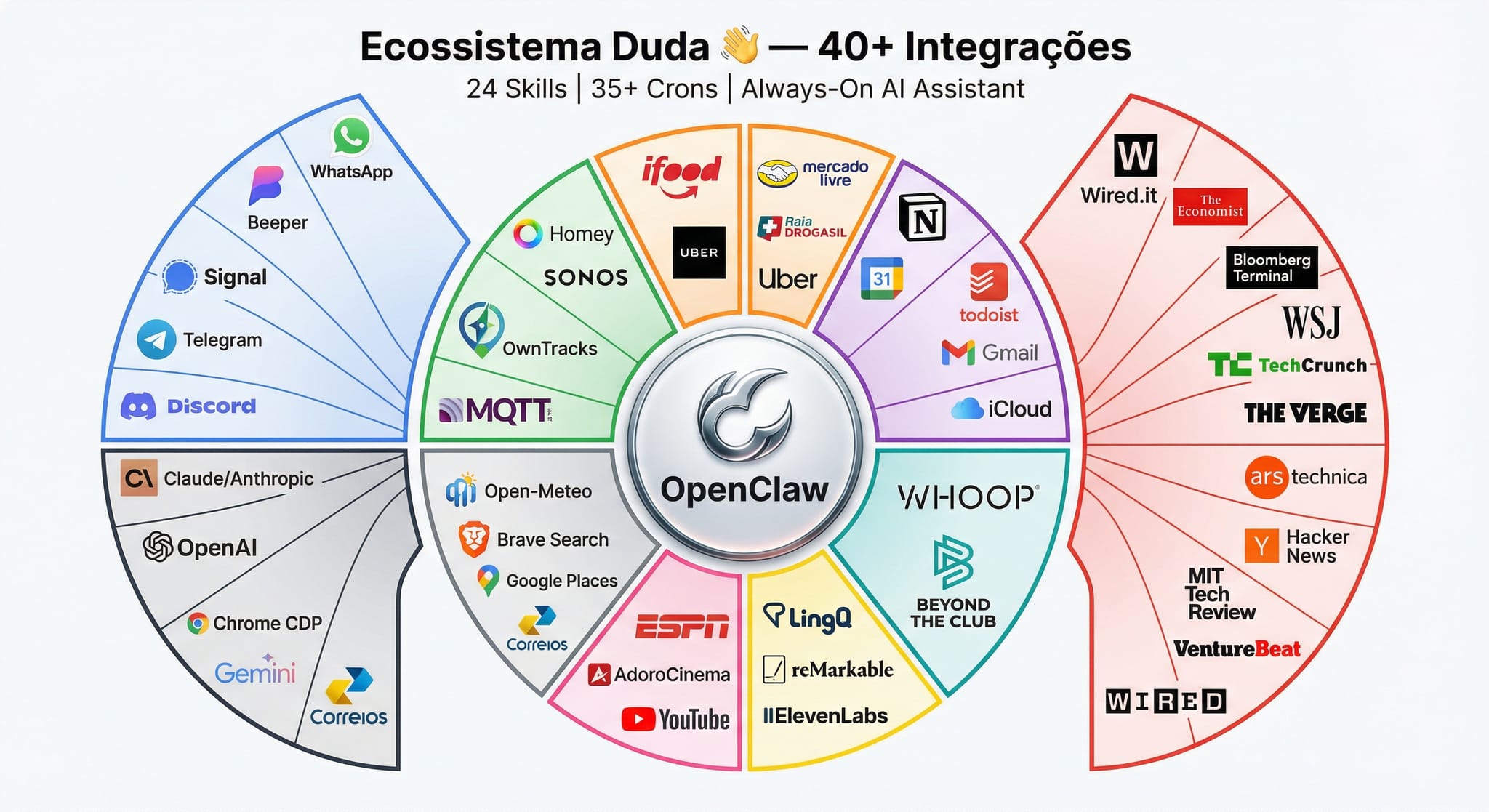
TOP 10 Most Impressive Use Cases I Built Without Opening the App
- Creatine purchase at RD Pharmacy — 1-hour Turbo delivery, automatic card switching, stock visibility
- Double Espresso on iFood — 2 simultaneous orders, 2 monitors, both delivered in 30 min
- Beyond Auto-Book — Continuously monitors slots and books automatically
- Call an Uber without opening the app
- Good Night Couple at 10pm — Presence + time validation + 3 automatic actions (AC, window, blackout)
- Price comparison of the same product between RD and Mercado Livre
- Monitored Heineken purchase on iFood — PIX + real-time delivery tracking
- International purchase of an 8U rack — 2 weeks of automatic tracking without opening the Correios website
- Italian Coach — Daily lesson with culture, 4 verb tenses, auto-save to Notion, audio podcast generated with ElevenLabs
- 7 Daily Digests — 150+ summaries in 16 days, zero effort from Rafa
Real Agentic Commerce (not theoretical)
Some examples of what was built:
iFood — 40+ endpoints created, PIX and credit card checkout, automatic monitoring every 3 minutes.
Mercado Livre — Browser automation via CDP, fully automated checkout.
RD Pharmacy — 1-hour Turbo delivery, automatic card switching when the preferred one wasn’t registered.
This isn’t “using an API.” It’s integrating the real world with fault tolerance.
Home, presence and context
OwnTracks → MQTT → Geofence Engine → Events → Homey.
The “Good Night Couple” automation is a good example: detects arrival, turns on AC, closes windows, lowers blackout blinds. This is the beginning of real contextual computing.
Real autonomy: the Beyond case
The Beyond The Club booking agent was the ultimate autonomy test:
- Surf session booking for the entire family
- Automatic slot monitoring
- Auto-book when availability opens up
- Cancellation with voucher
- Monthly pass negotiated via concierge
The agent doesn’t just execute. It waits, monitors, and acts when necessary.
Digests and continuous intelligence
Today I automatically receive 7 different digests per day: AI/ML-prioritized news, finance tracker with earnings, WhatsApp group summaries, WHOOP reports with recommendations.
Everything structured as data pipelines → summary → WhatsApp channel. It’s not about reading news. It’s about turning noise into a system.
What I learned in 15 days
Agents aren’t prompts, they’re state orchestrators. The most important layer isn’t the LLM — it’s identity + memory + ontology.
APIs break, browser automation saves the day. When the API doesn’t exist or changes, CDP and browser automation are the backup plan that works.
Autonomy requires silent monitoring. Nothing is more powerful than an agent that acts without you asking.
The future isn’t “chat that responds.” It’s chat that executes in your real world.
What this means
We’re moving toward AI as the operational layer of digital life: personal agents with persistent context, hybrid systems (API + browser + CLI + MQTT), ontology as the new competitive advantage.
This is just the beginning. Those who understand agent runtime + real integrations + ontology will lead the next wave.